
The Story of an Enterpreneur
Last updated: December 1, 2024
Let us start with a story of a lady entrepreneur. It’s a story about a great grandma named Oromma/ Orotha (erstwhile colloquial Malayalam versions of most beautiful Christian name -Rose) – let us call her Oromma Ammachi. She was married to Thomas (to be reconfirmed) of Veklamkalam family of Champakulam from Kattady family of a Kuttanandan village called Kumarankary. (Thomas is the great grandpa of Mercyammachi). Kumarankary is a village 12/15 Kms away from Champakulam and located near to Changanacherry if following canal route. Those days for Kuttanadu means of travel was traditional country boats called ‘Vallam’. Surprisingly the social system of the period demanded young girls to be married at tender age of 14 or 15 and entrusted with all responsibilities of household duties of her new home.
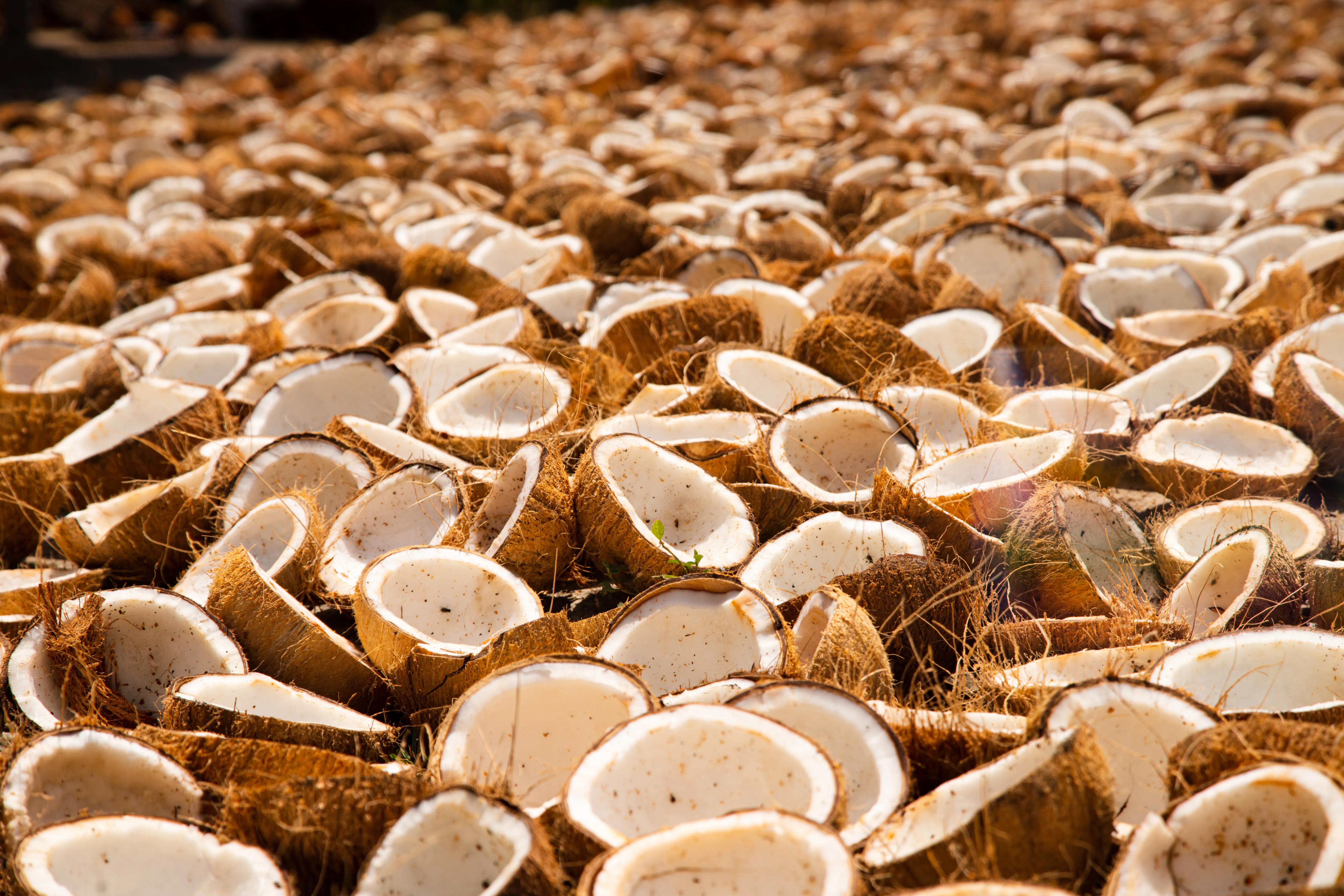
Our protagonist being a historical figure, traditional opening remark of ‘once upon a time’ does not fit in. With reasonable estimation we can assume the story was of a period of year 1890’s or early 1900 when our Oromma Ammachi was at her young age of probably 25 to 27 as a house wife raising 4 of her sons. (Eldest among the sons, Ouseph was grandfather to Mercy Ammachi who lead the second generation.) This was a period when Kuttanadu was under rule of princely state of Travancore and the economic situation of the surrounding towns and trade centres were on the upward move. However, for the village households those were the days of hand to mouth sustenance in Kerala, except for the landlords and few families enjoying ruler’s favour. By this time agriculture was the means of survival for most of our families. Kuttanadu was a fertile agricultural area with abundance of water source (lagoon like water logged fields suited to paddy cultivation, which earned Kuttanadu the name of ‘Nellara of Kerala’ ). To understand the topography better, we can visualize this area as large group of islands with huts and homes surrounded by network of water-logged paddy field, rivers and canals. But most of the cultivable land were held by a small group of upper-class people, a form of feudal system.) Christian middle class families were mostly engaged in paddy cultivation in water logged paddy fields leased from Brahmin land lords. (This system of lease of land on a crop sharing means was known as ‘Patom’. Although widely practiced ‘Patom’ system was not favourable to the farming community as the king share of the crop got collected by the land lords as lease, leaving the farmer family on perpetual poverty. However, the Christian households were known to be thriving with their disciplined life, careful financial management, and excellent cultivation practices. As part of the lifestyle, they managed to keep coconut trees and plantain on the small patches of their land property around their houses. Similarly, they raised livestock along with chicken and ducks to augment their income. Situation was not much different in Velamkalam family too. While mainly sustained from the paddy cultivation, household income out of coconut and livestock helps them to lead a modest survival, yest fragile. Under the ruler local Royal Court was administering the governance. Being the custodian of the temples, the Court manged distribution of rice to numerous of temples in the region. Large quantities of rice were required to keep in stock for this distribution. Those were the days mechanised rice mills not popular in the locality and each house hold were doing the manual de-husking of paddy for their need of rice. (refer the traditional de-husking means https://www.youtube.com/watch?v=9Djc5ZVUyUw ) In order to keep the required stock of rice, the Court entrusted house wives to do the de-husking job on a contract basis. The court issued paddy to the ladies with a condition of returning the rice in finely polished form for an agreed service charge, which used to be paid in the portion of rice. The system was an excellent solution for making available the required rice. But there was a challenge in deciding the factoring of the rice to be returned. In manual de-husking, a portion become broken rice and getting waisted. But percentage of wastage varies depends on the skill of the person who do the job. Anyway, to avoid misuse of this process loss, Court estimated factoring for wastage and fixed a uniform collection proportion. Oromma Ammachi managed to make it as an opportunity. The wastage was taking place while doing the final polishing process. She developed special skill / method to do polishing with practically minimal wastage. With this she earned an additional benefit of saving in the factor of wastage in addition to the standard processing charge. She engaged more workers and undertaken more job, but skilfully did the polishing job herself. Needless to say, that she made a good fortune out of this service and the family could acquire some additional landed property with her saving . With this modest venture she was building the foundation for a generation of entrepreneurial lineage, which carried over her legacy for 4 generations. Story not ends there. Having led a life of prosperity, the otherwise modest household earned good reputation among the village. As days advances Oromma Ammachi had the privilege to saw her children build a successful venture in Coconut business, a traditional way of drying coconut and extracting coconut oil. (It’s a story by itself to be discussed separately.) The process was coconut kernels dried up in sun shine and convert it as ‘Copra’ from which coconut oil was extracted. (See link for picture https://images.app.goo.gl/8o8yY6udpd7LQRMb8 ) This was a thriving business of that period as coconut oil became an industrial ingredient for soap manufacturing industry in addition to its traditional use of edible oil purpose.
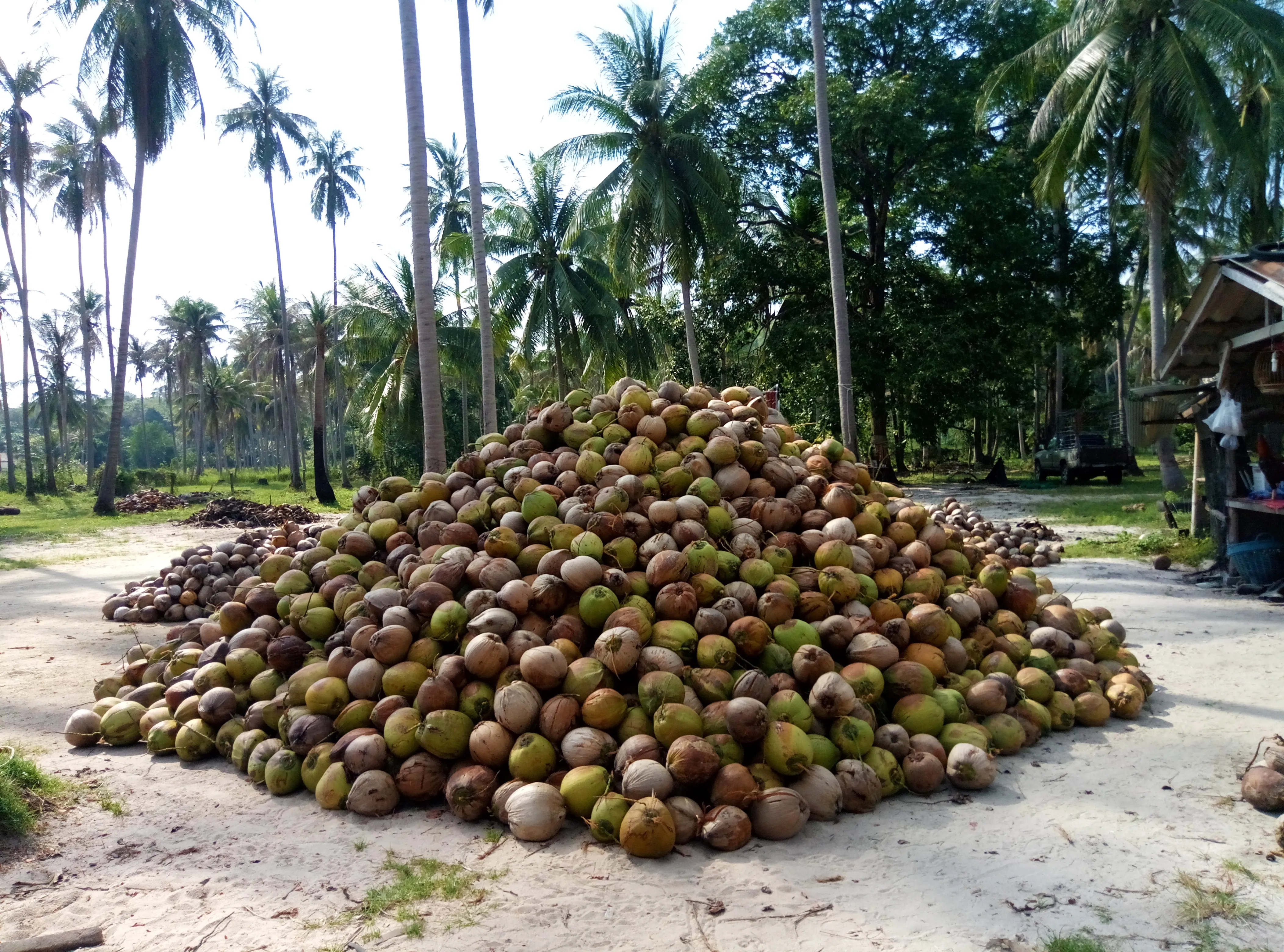
By the time of her elderly life, the family managed 3/4 ‘Copra Kalam’ (yard where coconut was getting dried) , each having a processing capacity of 3000/4000 coconuts at a time. The largest among them was at our ancestral home. As a routine coconut / copra were protected under ‘Atty’( a traditional movable shade made of bamboo frames work, paved with coconut leaf) during night time and rainy days to protect coconut from weather and theft. So, every evening by gathering coconuts together and closing the ’Atty’ and next morning spreading the coconut on the sunshine were the daily chorus at each Copra Kalam. Among the spreading of coconut, most strenuous work was to ensure each piece of coconut kept upwards so as to get proper sunshine for drying, which may go up to even 2 hours, if someone doing it continuously. One had to do it by siting on your leg for longtime on scorching sunshine. As a ritual Oromma Ammachi did this work every day on her own. Although that time family could afford labour for this work, she chose to carry out this time taking task for the comfort of her children and grandchildren. More than the support in physical work, she ensured overseeing the Kalam and its management with this dedication and allowed others to take care of the rest of the works. This untiring spirit of activism she transferred to her great grandchildren, from whom we inherit some part of it.